The Rise of Hyper-Personalized Content Algorithms in 2026

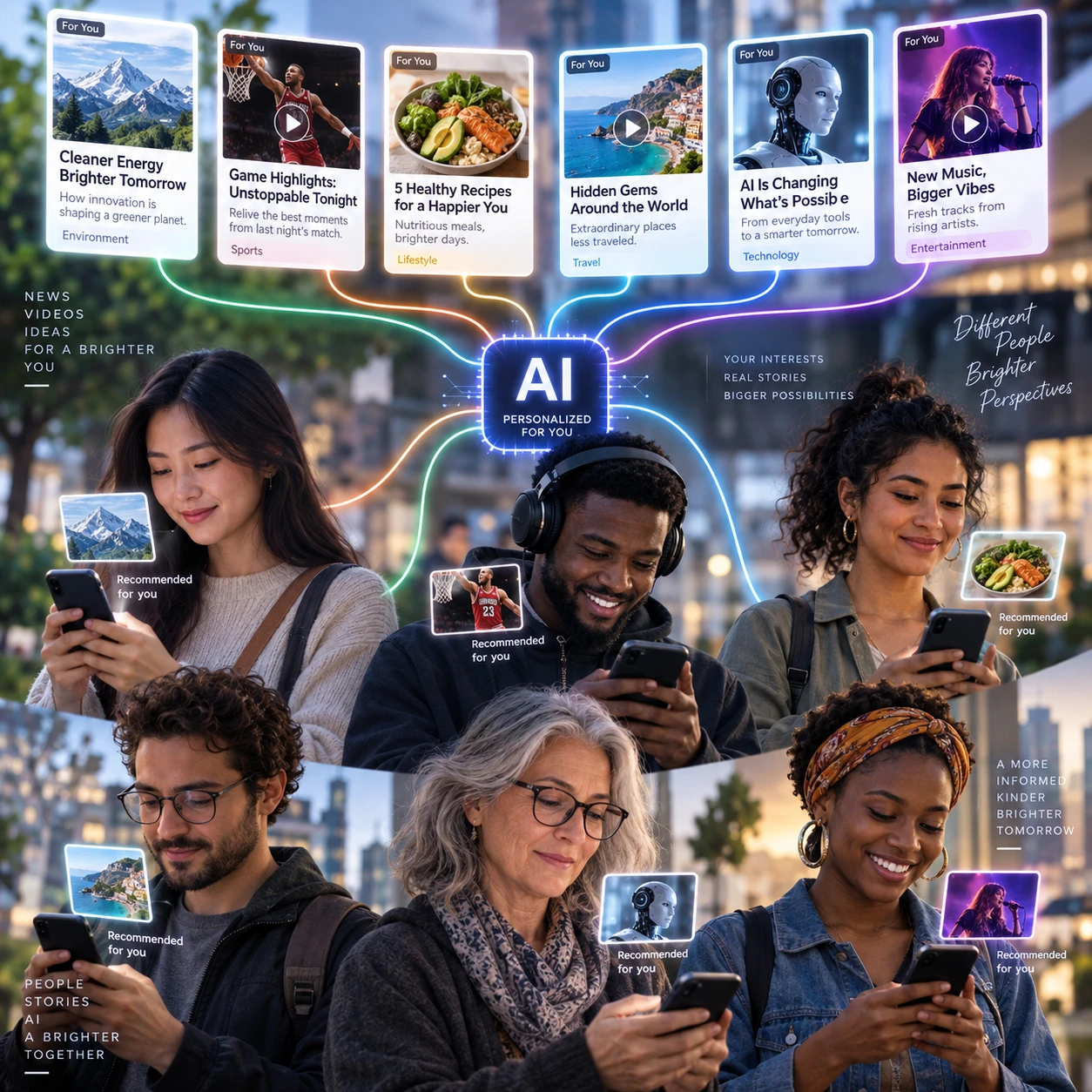
In 2026, a reader opening a social feed may see a local investigation, while another sees a short explainer on the same subject. Hyper-personalized content algorithms help shape those differences, selecting and ordering content based on signals about an individual’s interests and behavior.
For media companies, this shift brings a strategic question: how can a story feel relevant to one person without disappearing from everyone else’s view? The answer involves more than artificial intelligence (AI). It requires thoughtful use of audience data, clear editorial priorities, and measurement that values trust as well as clicks.
What hyper-personalized content algorithms do
Hyper-personalized content algorithms use signals about an individual to recommend or rank content that may be relevant to that person. Unlike broad audience targeting, which groups people into segments, individual recommendations can adapt to a person’s interactions over time.
A content recommendation algorithm may consider signals such as which stories someone opens, how long they watch, what they save, or which topics they follow. AI can help identify patterns across those signals and match content to likely interests. The result might be a different story order, format, headline, or suggested next item for each user.
Audience segmentation still plays a role. A publisher might create segments for local news readers, sports fans, or subscribers, then use personalization to refine recommendations within those groups. The distinction is one of scale and granularity: segmentation describes a group; hyper-personalization attempts to respond to a person’s changing signals.
These systems do not know a reader’s full intentions. A single click can reflect curiosity, disagreement, or an accidental tap. Recommendations are predictions, not proof of what someone values. That matters when teams decide how much weight to give any one engagement signal.
Why personalization is advancing in 2026
Personalization is advancing in 2026 because AI can help process more audience signals, while social media platforms continue to compete for attention through relevant discovery. The direction is clear, but the exact systems and data practices differ by platform and should not be assumed.
Recommendation models can combine many kinds of interaction data and update predictions as new signals arrive. For media companies, that creates a chance to surface useful reporting to readers who may not follow the publication directly. A regional story, for example, could reach people who have shown interest in a nearby community, even if they have not previously visited the publisher’s page.
At the same time, audience expectations are changing. People often want feeds that feel useful, while also expecting control over what they see and how their information is used. Privacy rules and platform policies also affect which data can be collected, retained, or used for targeting.
First-party data—information a media company collects through its own relationship with its audience, such as newsletter preferences or on-site reading choices—can offer a more direct foundation for personalization. It still requires appropriate notice, consent where required, and careful handling. Access to more data does not automatically produce better recommendations.
How algorithms shape the audience experience
Content recommendation algorithms shape the audience experience by influencing what people discover, how quickly they find relevant material, and how varied their feeds become. Personalization can reduce search effort, but repeated emphasis on familiar interests may narrow exposure to other subjects.
A well-designed recommendation can connect a reader to a useful follow-up: a backgrounder after breaking news, a local angle on a national story, or a video summary for someone who prefers watching. This can make discovery feel less like a stream of unrelated posts and more like a path through information.
The trade-off is that engagement signals can favor what holds attention rather than what broadens understanding. If a system repeatedly recommends similar topics, a user may see fewer unfamiliar perspectives. This is not inevitable, but it is a risk when relevance is measured too narrowly.
Media companies can help preserve content variety by considering more than predicted clicks. Recommendation systems may include freshness, topic diversity, public-interest value, and a mix of formats. User controls also matter: options to follow topics, reset recommendations, or switch to a chronological view can give people more say in their experience.
What this means for media companies
For media companies, hyper-personalization affects editorial strategy, distribution, and audience relationships. It can help match stories to interested readers, but relying too heavily on platform recommendations can make reach and traffic harder to control.
Editorial teams can plan for different entry points to a story without changing its facts or standards. A major investigation might have a concise summary, a detailed analysis, and a local explainer. Each format serves a different reader need, while the newsroom retains responsibility for accuracy, context, and prominence.
Distribution also becomes less predictable. A platform may show a piece to people beyond a publisher’s followers, or its recommendations may shift. Teams should treat social discovery as one route to audiences, not as a substitute for a direct relationship through newsletters, apps, events, or a publication’s own site.
Personalization can produce a misleading sense of success if teams focus only on short-term engagement. A high click rate may not indicate that readers understood the story, returned to the publication, or trusted the source. Media companies need to weigh the value of reach against the risk of becoming dependent on opaque systems they do not control.
A practical strategy for adapting
Media companies can adapt by setting clear editorial goals, using audience data responsibly, testing recommendation choices, and measuring outcomes beyond clicks. A practical approach is to treat each recommendation as a test of relevance, breadth, and trust.
- Set the editorial purpose. Decide what the system should help audiences do: find local coverage, follow a developing story, or discover useful explainers. Define boundaries, such as not allowing popularity alone to determine visibility.
- Start with appropriate data. Use first-party data and declared preferences where possible. Document what each signal means, how long it is retained, and whether it is appropriate for the intended use. Avoid treating an isolated click as a durable interest.
- Test recommendations against a baseline. Compare a personalized feed with a chronological or editorially selected version. Review results across audience groups, not just in aggregate, so that a gain for one group does not hide a loss for another.
- Measure a balanced set of outcomes. Track discovery, repeat visits, completion where relevant, topic diversity, and user feedback alongside clicks and time spent. Use experiments carefully; a short test may not reveal long-term effects on trust or loyalty.
- Keep editorial review in the loop. Give editors a way to set limits, correct poor recommendations, and ensure important public-interest coverage remains discoverable.
One useful operating rule is to ask three questions before expanding a personalization feature: Does it improve relevance? Does it preserve enough variety? Can the team explain and audit how it works? If one answer is no, the feature needs adjustment before it becomes a core distribution strategy.
Balancing relevance with trust and privacy
Media companies can balance relevance with trust by collecting only appropriate data, explaining how personalization works, and giving users meaningful control. Privacy and consent should shape the design from the start, rather than being added after a recommendation feature is built.
People should be able to understand, in plain language, why a story appears in their feed and what choices are available. Depending on the service, those choices might include changing topic preferences, turning off certain recommendations, or clearing and resetting activity-based suggestions. Clear controls are useful only if they are easy to find and work as described.
Algorithmic transparency does not require publishing every line of code. It does require a credible explanation of the main signals and editorial safeguards, plus internal processes for checking outcomes. Teams should review whether recommendations systematically exclude topics or groups and provide a way to report a problem.
Collecting less data can limit how precisely a system predicts individual interests. That is a real trade-off, but precision is not the only measure of a good media experience. A recommendation that respects consent, offers useful variety, and earns repeat trust may serve a publication better than one optimized for immediate attention alone.
Frequently asked questions
How does hyper-personalized content differ from audience segmentation?
Audience segmentation groups people by shared traits or interests, while hyper-personalization tailors recommendations to an individual’s signals and may update them over time. A media company can use both: segments for broad planning and individual recommendations for discovery.
What data can content recommendation algorithms use?
Depending on the service and its policies, algorithms may use interactions such as views, clicks, saves, follows, or declared preferences, as well as contextual information such as the content being viewed. The exact data varies. Media companies should verify what they collect, explain its use, and follow applicable privacy requirements.
How can media companies personalize without compromising editorial standards?
Set editorial rules before optimizing recommendations. Keep accuracy, public-interest value, and topic diversity in the decision process, and let editors review or override results. Personalization can change which suitable story a reader sees first; it should not change the facts or lower reporting standards.
How should teams measure the impact of personalization?
Measure more than clicks. Compare personalized and baseline experiences using discovery, return visits, relevant completion, topic variety, and audience feedback. Review results across different groups and over enough time to spot trade-offs that a short-term engagement lift may conceal.