The Ethics of Deepfake Technology in Journalism and Social Media

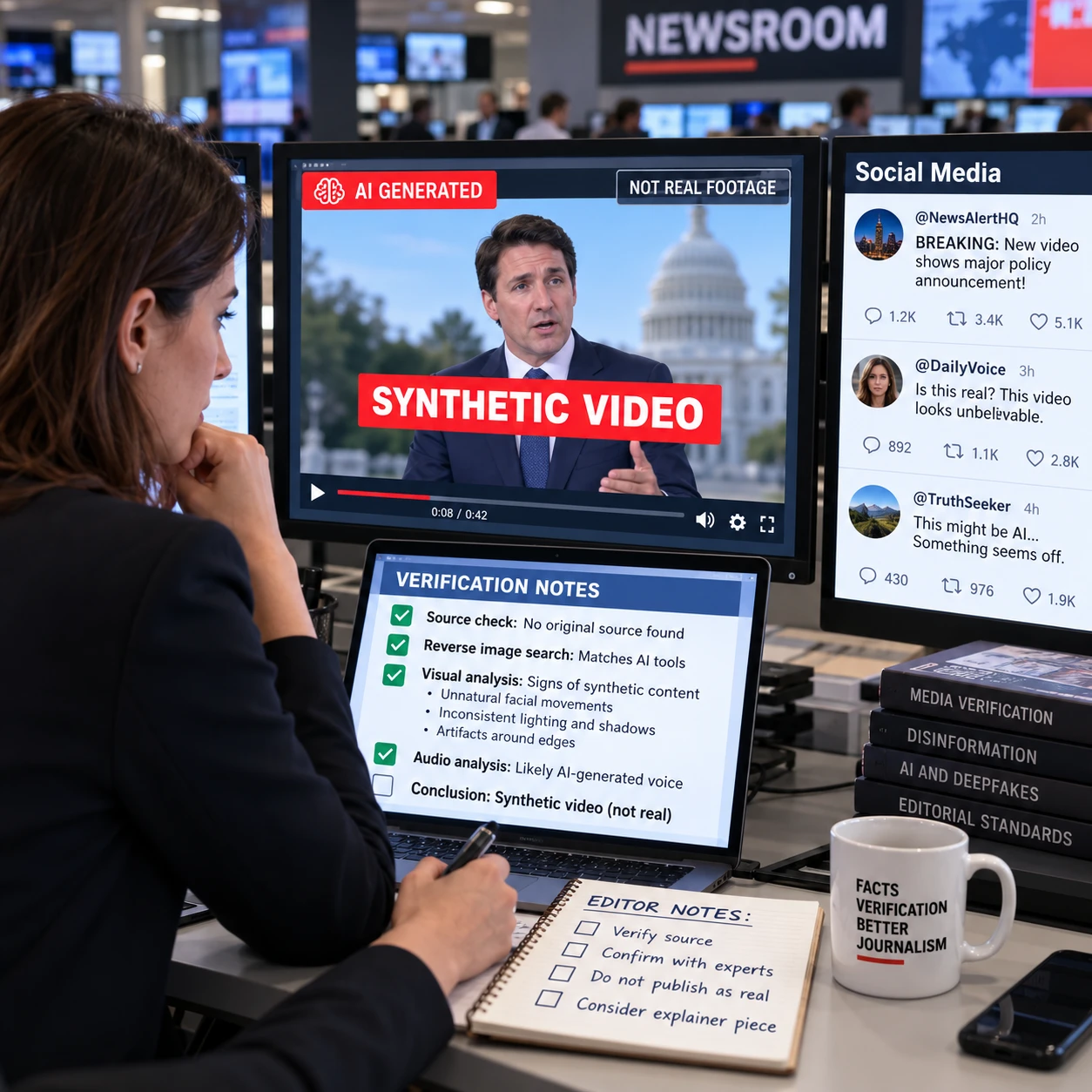
Deepfake technology has made realistic synthetic video, audio, and images easier to create and share. In journalism and social media, the ethical question is not simply whether a piece of media is artificial. It is whether people understand its origin, whether the people depicted consented, and whether publication serves the public without causing avoidable harm.
What Deepfakes Are—and Why They Matter in 2026
Deepfakes are images, video, or audio altered or generated with artificial intelligence to imitate a real person or event. In 2026, their growing realism makes verification and clear context essential for newsrooms and social media teams.
Deepfake technology is one form of synthetic media, often made with generative AI. Some synthetic content changes a person’s face or voice; other examples create a scene that never happened. The label “deepfake” is often used loosely, so editors should describe precisely what was generated, altered, or left unchanged.
For journalists, the stakes are high because audiences often treat video and audio as direct evidence. A fabricated clip of a public figure appearing to make a statement could distort coverage, while an altered recording may be shared as authentic before a newsroom has time to investigate. Social platforms can spread such material quickly, and a correction may not reach everyone who saw the original.
That does not make all synthetic media deceptive. A clearly disclosed reenactment, accessibility aid, or educational illustration can help explain a complex story. The ethical risk grows when realistic content hides its artificial origin or is detached from the context audiences need to interpret it.
Ethical Risks: Misinformation, Consent, and Reputational Harm
The main ethical risks of deepfakes are deception, non-consensual use of a person’s likeness, and damage to reputation or safety. These harms can affect the person depicted, the audience, and the credibility of the publisher.
A fabricated clip can mislead viewers even when it is intended as satire or commentary. If it circulates without its original caption, the distinction may vanish. In a breaking-news environment, false audio or video can also waste reporting time and complicate efforts to establish what actually happened.
Consent and likeness rights deserve particular care. A person may not have agreed to have their face or voice used in a synthetic scene, and publication can expose them to harassment, embarrassment, or professional consequences. The risk is especially acute for private individuals, minors, and people shown in intimate or vulnerable situations. Editorial purpose does not erase the need to consider their interests.
There is also a trust problem. Repeated exposure to convincing fakes may lead people to dismiss authentic evidence as fabricated, sometimes called the “liar’s dividend.” That possibility should not be used to imply that every disputed recording is genuine. It is a reason to report what verification can establish, what remains uncertain, and why.
Responsible Uses in Journalism and Social Media
Responsible uses of synthetic media are transparent, contextualized, and proportionate to a clear editorial or creative purpose. They avoid impersonation and protect the rights and dignity of people represented.
For example, a newsroom might use a clearly labeled synthetic visualization to explain how a proposed technology works, or a consenting actor’s likeness in a historical educational reenactment. A social media team might create a fictional voice for a campaign, provided the post does not invite audiences to mistake it for a real person’s statement. In each case, disclosure should travel with the media, not sit only in a caption that may be removed when a clip is reposted.
Before approving a use, editors can apply a simple three-part test:
- Purpose: Does synthetic media add genuine explanatory or creative value, or is realism being used mainly to attract attention?
- Permission: Have the relevant people agreed to the use of their likeness or voice, and are there additional safeguards for vulnerable subjects?
- Perception: Could a reasonable viewer mistake the content for authentic footage, even with the planned label?
If the content risks misleading people or causing disproportionate harm, a less realistic illustration, written explanation, or conventional reenactment may be a better choice. Transparency helps, but a label cannot make every use ethical.
Verification, Disclosure, and Editorial Accountability
Newsrooms should verify the source and context of suspected deepfakes, disclose material synthetic alterations, and document who reviewed the content. No single detection tool can reliably settle every case.
Start with provenance: who supplied the file, when and where was it recorded, and can the source provide an original or an independent witness? Reporters can compare the clip with other recordings, seek confirmation from people present, and check whether details such as location, timing, and surrounding events fit. File metadata may offer clues, but it can be missing or altered.
Automated detection tools and content credentials can support this work, but they are not proof on their own. A tool may flag authentic material or miss a manipulated clip; credentials may be absent because a file was edited or reposted. Teams should treat such signals as leads and record their limitations.
When publishing, use plain labels such as “AI-generated reconstruction” or “synthetic audio,” and explain what was changed and why. Keep that explanation near the image or clip and include it in the post text where possible. An editorial record should capture the source, checks performed, consent status, uncertainty, label wording, and approval. This creates a reviewable decision trail rather than relying on memory after a dispute.
A Social Media Strategy for Managing Deepfakes
A practical deepfake strategy combines preparation, careful verification, consistent labeling, and a measured response when suspicious content spreads. Media companies should agree on responsibilities before a viral incident, not improvise across separate newsroom and social teams.
Set a shared policy for intake, escalation, publication, correction, and removal requests. Name an editor or standards lead to coordinate with reporters, social producers, legal counsel, and platform contacts when needed. The policy should distinguish between content the organization created, content it is verifying, and material it is merely discussing.
When a suspected deepfake starts circulating, teams can:
- Preserve a copy and note where, when, and in what context it appeared.
- Avoid reposting the clip as a dramatic preview before verification; that can amplify the very claim being checked.
- Consult relevant sources and independent evidence, then state what is confirmed and what remains unknown.
- Publish a concise update with a visible label or correction, and link it to the original coverage where practical.
- Report impersonation or non-consensual material through the platform’s current channels, while recognizing that platform decisions may take time.
Speed matters, but so does restraint. A rushed debunk can repeat a harmful clip and send new viewers to it. If verification is incomplete, say so, explain what checks are underway, and update the post when evidence changes.
Building Audience Trust Through Media Literacy
Media literacy helps audiences assess synthetic media by teaching them to pause, check provenance, and seek reliable corroboration. It cannot make viewers responsible for detecting every sophisticated fake, but it can reduce impulsive sharing and clarify how journalism verifies evidence.
Media companies can explain their methods in short, useful formats: show how a newsroom checks a viral clip, distinguish a reconstruction from documentary footage, and correct errors in the same channels where they appeared. Avoid telling audiences to rely on visual “tells” such as blinking or lip movement; those clues are unreliable as generative AI improves.
Offer a practical checklist alongside coverage:
- Who first posted the media, and can the original source be found?
- Do independent sources confirm the event, location, and timing?
- Does the post clearly identify synthetic or altered content?
- Is the clip being shared with a claim that goes beyond what it shows?
For media companies in 2026, public trust depends on explaining uncertainty as carefully as certainty. Audiences do not need a promise that every fake will be caught. They need visible standards, timely corrections, and a clear account of how a newsroom reached its conclusion.
Frequently Asked Questions
How can journalists verify a suspected deepfake?
Journalists should check the original source, seek independent witnesses or recordings, compare the media with known context, and consult technical analysis when useful. No single visual clue or detection tool proves authenticity or manipulation.
Should synthetic media always be labeled?
When synthetic media could reasonably be mistaken for authentic evidence, it should be clearly labeled and explained. The label should stay close to the content and identify the relevant alteration; context and consent still matter.
What ethical questions should editors ask before publishing a deepfake?
Editors should ask what public or creative purpose it serves, whether people depicted consented, whether the content could mislead or harm, and whether a less realistic alternative would work. They should also plan how to label and contextualize it.
How can media companies respond when a deepfake spreads on social media?
Preserve the evidence, verify before amplifying, publish what is known with clear uncertainty, and correct or update posts as needed. Report impersonation or non-consensual material through platform channels, but do not treat removal as a substitute for accurate public communication.